Lip combo · Liner + gloss
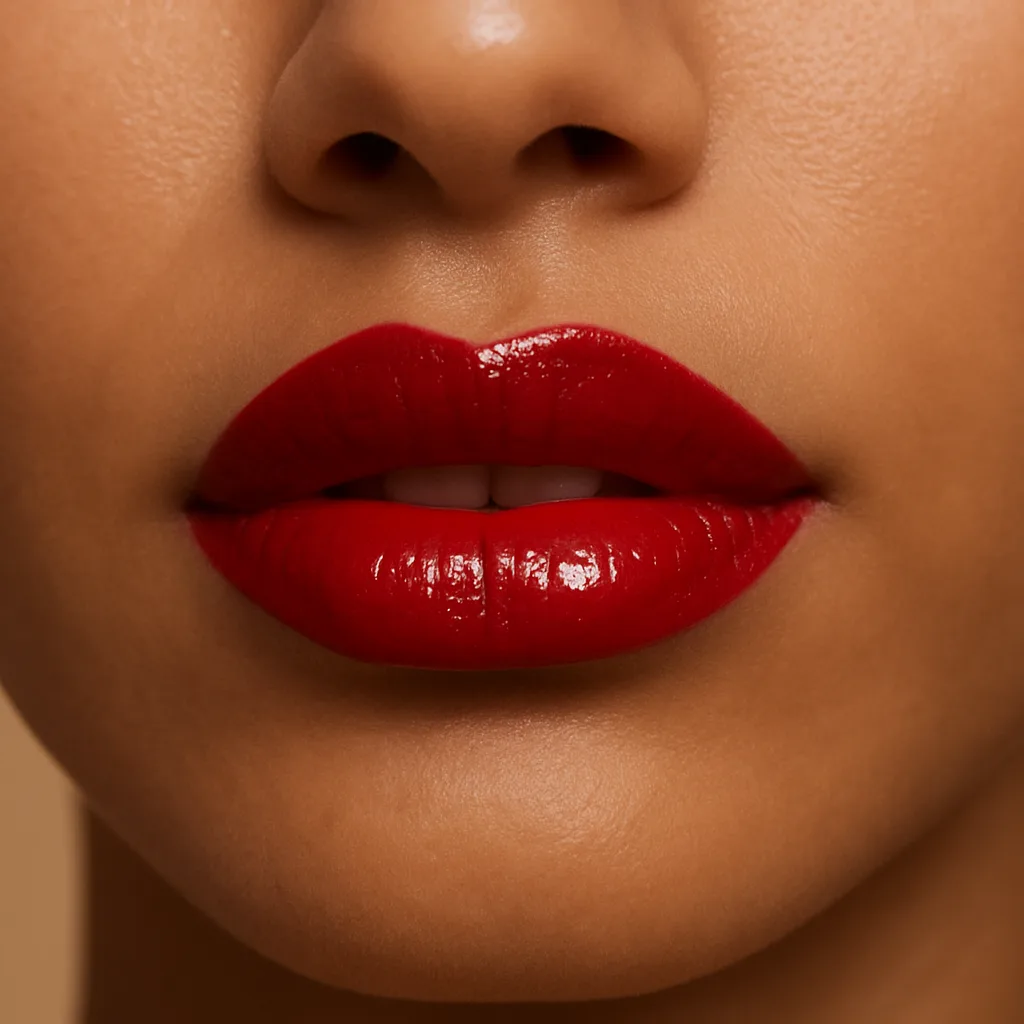
Glossy Red
Red is the pairing where shine does the most work and forgives the least. Gloss makes a mouth look fuller and softer, but it also magnifies every wobble in the edge — which is why this one is built in a different order from the others. The liner goes on first and is filled in as a base, the gloss goes over colour rather than over bare lip, and the outside of the line is cleaned up at the end. Budget about seven minutes; most of it is the edge, and that is the part people skip.
Your skin tone
Skin tones sit on a spectrum, not in three boxes — if you are between two, read both, because undertone matters as much as depth.
Shade matching & colour correcting
Find your undertone
Red has a temperature, and it is the single thing that decides whether a red suits you. Blue-reds (raspberry, cherry, true crimson) sit cool; orange-reds (tomato, brick, coral-red) sit warm. The fast test is comparison, not theory: hold a blue-red and an orange-red against your bare face in daylight and see which one makes your skin look even rather than sallow. Your lips give a clue too — lips that lean pink usually suit blue-reds, lips that lean peach or brown usually suit orange-reds. Olive skin often needs a red with a touch of brown in it, because both a bright blue-red and a bright orange-red can pull the green out of the skin.
Match your liner and gloss
Match the liner and the gloss in the same temperature, and make the liner one step deeper than the gloss — a blue-red liner with a blue-red gloss, an orange-red with an orange-red, never one of each. The liner is what holds the edge under shine, so it should be the most pigmented red in the pairing, and the fill under the gloss should be matte or satin rather than another gloss, which would slide. If you want a softer version of the look, keep the red liner and fill and use a clear gloss instead of a red one: you get the shine without adding a second red that might be a different temperature.
Liner and gloss by tone
- Light
Lighter skin looks brightest in a true red or a blue-red, with the line kept exactly on the natural edge. Orange-reds are the risk: over pale skin they turn coral, and under gloss that reads as pink rather than red. If a red makes your teeth look yellow, it is too warm for you.
- Medium
Medium skin carries most reds, so choose on warmth rather than depth: golden and olive undertones suit brick and warm true reds, cool undertones suit blue-reds and cherry. One shade deeper in the liner than the gloss keeps the edge from blurring.
- Deep
Deeper skin looks strongest in a deep true red, wine or a blue-red with real depth. Bright tomato and coral-reds can look orange against deeper skin, and pale or sheer reds look pink. Line and fill in the same deep red before the gloss, so the colour stays saturated where the shine thins out.
Why lip colour goes grey — and what to use instead
A red goes pink or dusty for two reasons, and neither is technique. The first is a gloss with a white or pearl base: white pigment scatters light on the surface, so a deep red turns milky pink over it. The second is a sheer red over bare, pigmented lips, where the red mixes with the lip's own brown and lands on a dusty rose. What to use instead: a clear or red-tinted gloss with no pearl, laid over a liner-and-lipstick base in the same temperature; and on deeper skin, a deep true red or wine rather than a bright mid-red. If the mouth looks pinker than the pencil did, the gloss is the problem — swap it before you change the red.
The kit
What you need
Liner
- Red lip liner in the same temperature as the gloss — a blue-red with a blue-red, an orange-red with an orange-red
- A pencil you can sharpen to a fine point; the edge is the whole job
Colour
- Red lipstick or a pigmented lip pencil to fill the lip under the gloss — matte or satin, not another gloss
Gloss
- Red-tinted gloss or lip oil, non-sticky, without pearl
- A clear gloss works over a strong red base if you want less intensity
Tools
- Concealer and a small angled brush for the outside edge
- Cotton buds
- Tissues for blotting
Before you start: New to a product? Patch-test it on your inner forearm 24 hours before you wear it on your face, and check expiry dates on anything that has been open a while. Stop using anything that stings, itches or breaks you out.
Products & brands
Suggestions, not tested endorsements. These are widely available lines that suit this step; formulas and shade ranges change, so check the version you are buying. No prices and no links — brands are listed by tier so you can choose by budget.
Red liner
Drugstore
- e.l.f. Cream Glide Lip Liner
Mid-range
- MAC Lip Pencil — Cherry or Ruby Woo
- Laura Mercier Caviar Perfecting Lip Liner — 07 Red Velvet
Premium
- Pat McGrath Legendary Longwear Lip Liner
- Estée Lauder Double Wear Stay in Place Lip Pencil
Red base colour
Drugstore
- Collection Soft Matte Lipstick
Mid-range
- MAC MACximal Silky Matte Lipstick — Ruby Woo
- NARS Powermatte High Intensity Lipstick
Premium
- Estée Lauder Pure Color Matte Lipstick
- Sisley Le Phyto-Rouge
Gloss over the top
Drugstore
- e.l.f. Glow Reviver Lip Plumping Oil
Mid-range
- NARS Afterglow Lip Shine Gloss
No premium gloss was verified — a clear or tinted gloss from the drugstore or mid-range tier works over this pairing.
Tools — concealer, angled brush, cotton buds, tissues
No specific product named here — a damp makeup sponge, a small angled brush or a spoolie from any brand works. No brush, sponge or spoolie could be verified at drugstore or mid-range, so none is named.
No product here is paid for or linked to, and nothing on this page earns a commission. Where a slot has no verified product we say so rather than guess.
Follow along
Step by step
Use Previous and Next, or the arrow keys.
Prep, but don't exfoliate today
Balm, wait a minute, blot, and leave the scrub for another day — red settles into any flake you have just loosened.
Why it works
Red is the least forgiving colour over texture: every flake catches pigment and shows as a darker speck. A balm-and-blot gives a smooth surface without opening the skin up first.
Skin tone notes
- Light
Lighter lips show every flake and every line under red, so blot twice and keep the balm thin. Choose a true red or a blue-red; an orange-red on cool lighter skin turns coral the moment gloss goes over it.
- Medium
Medium lips can take most reds. Blot thoroughly, because leftover balm makes the liner skip and the fill patchy, and patchiness under gloss is very visible.
- Deep
Deeper lips often have a natural pigment line at the edge, so balm and blot before anything else — a red drawn over dry edges catches there first. Pick a deep true red or a wine rather than a bright tomato, which can look orange on deeper skin.
Next
More combos
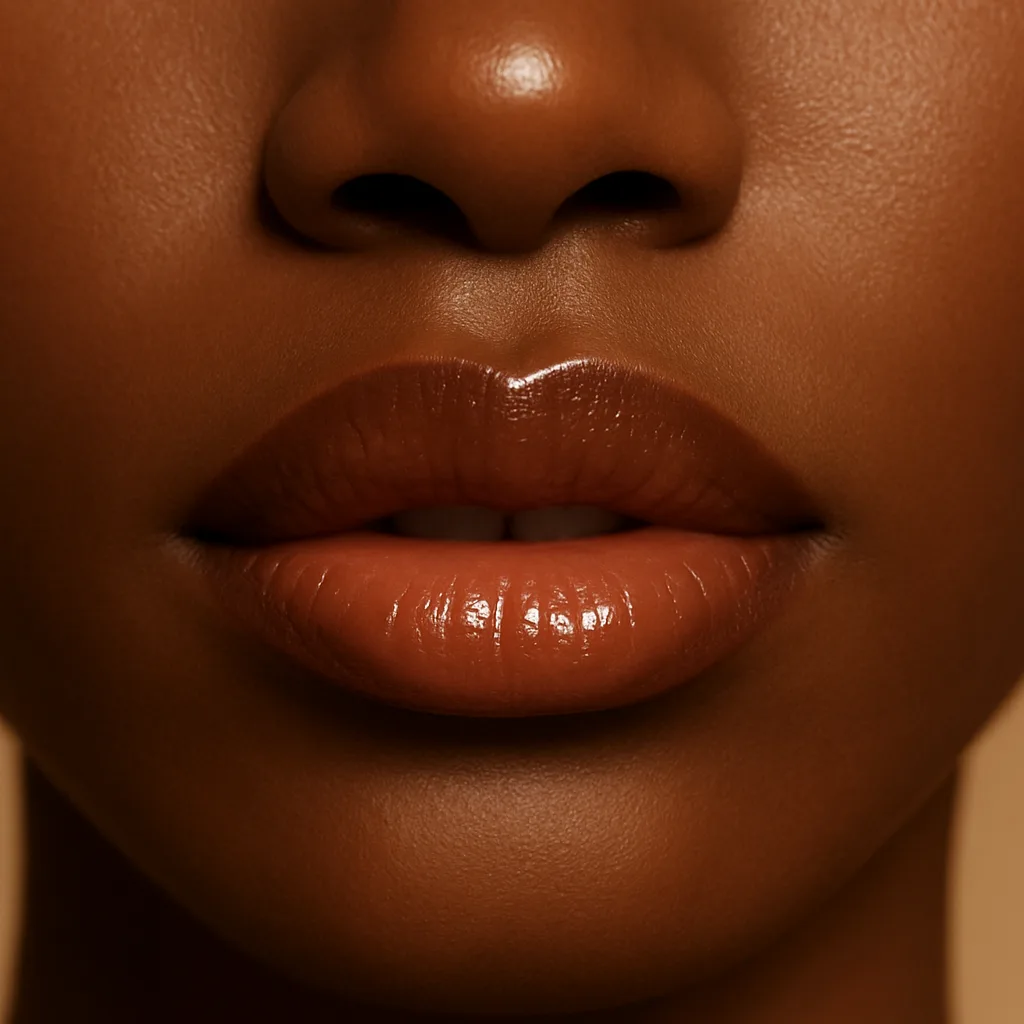
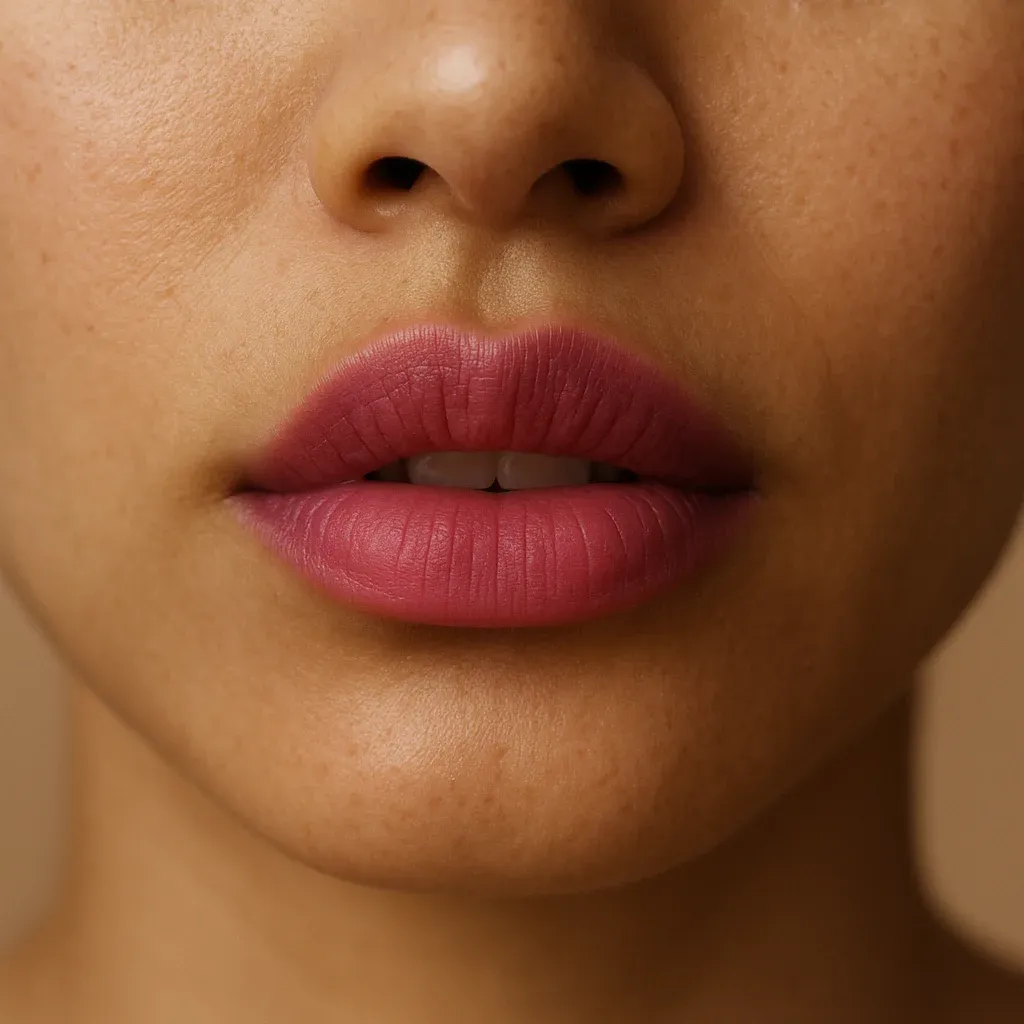
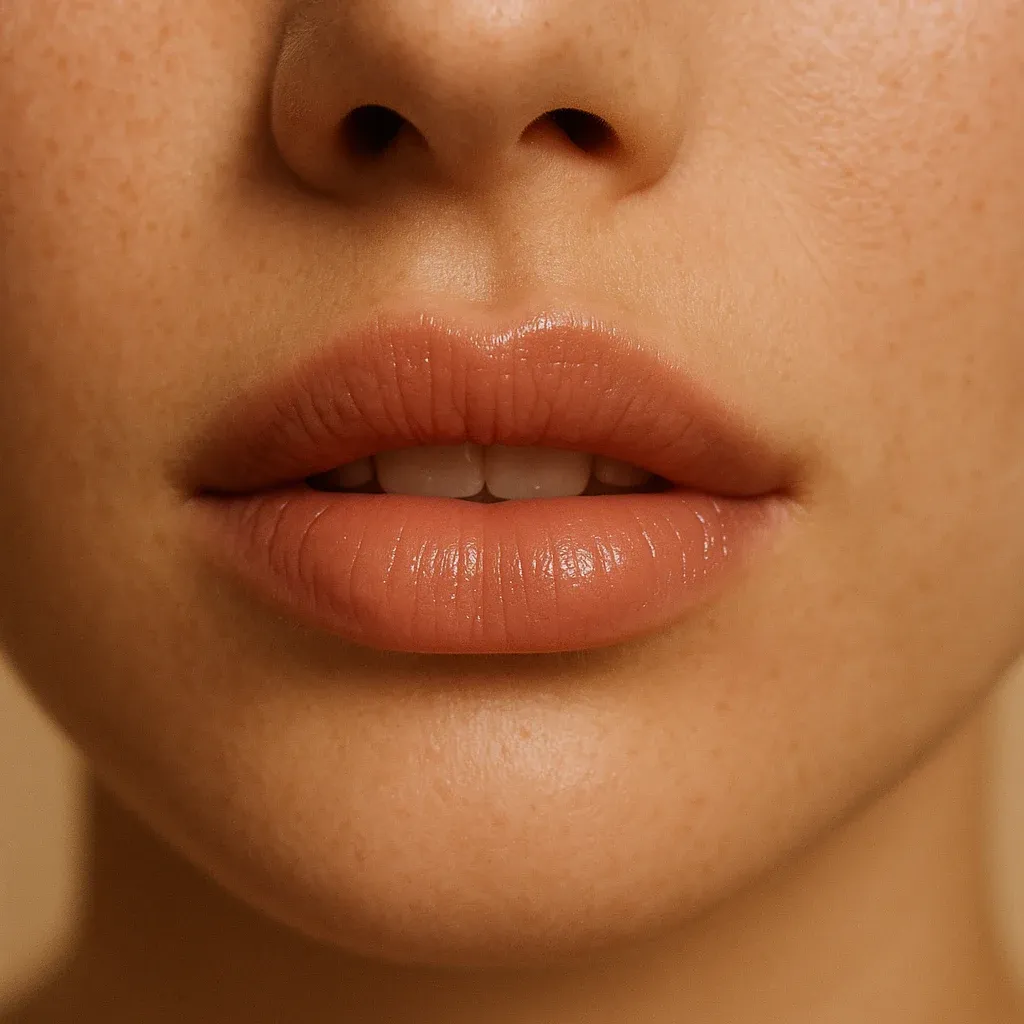
Want the whole face rather than just the lip? Browse the nine full looks.