Lip combo · Soft matte
Blurred Lips
Blurred lips are the soft-edge version of a lined mouth: you draw a shape, then move it. The liner goes on a little outside your natural line and is smudged inward with a fingertip or a cotton bud, the colour is pressed into the centre and pushed out until it fades, and the finish stays matte or soft-matte so the edge never sets into a line. It takes about four minutes, and the one decision that matters is the liner: too dark, and the blur reads as an outline instead of a fade. The tone notes on each step cover how far the blur can go before the shape disappears on your lips, and why a liner that is too dark shows through a soft edge.
Your skin tone
Skin tones sit on a spectrum, not in three boxes — if you are between two, read both, because undertone matters as much as depth.
Shade matching & colour correcting
Find your undertone
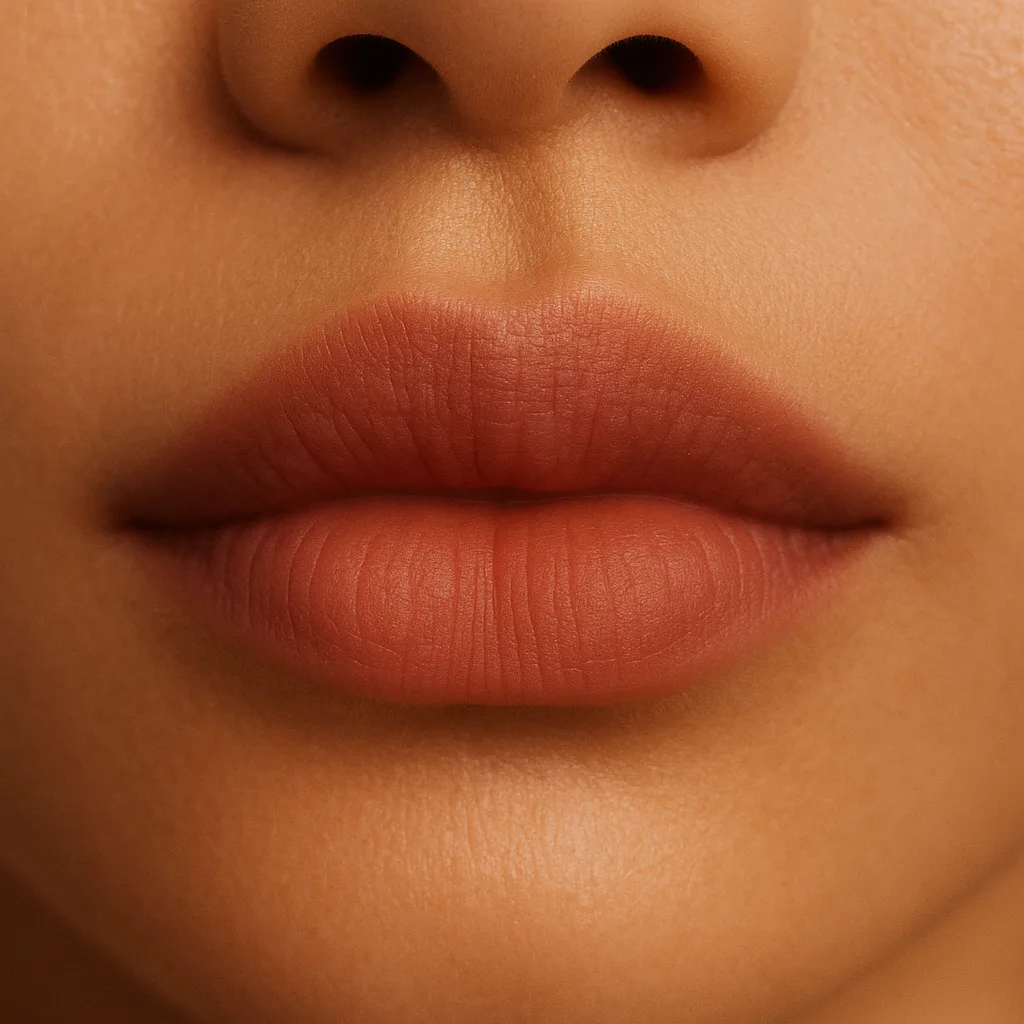
A blurred lip is judged on your lips rather than on your skin, because the whole point is that the colour fades into your own. Look at your bare lips in daylight: lips that lean pink or rose take a rose or soft nude liner, lips that lean brown or peach take a terracotta or rosy-brown one. Hold the liner against your lips by a window rather than on the back of your hand — hand skin is a different colour from lips on almost everyone — and see whether it looks like your own lip deepened or like a different colour sitting on top. Ignore the wrist-vein test here: it tells you about your face, and this is the one product that has to agree with your mouth.
Match your liner and colour
Pick the liner one step deeper than your natural lip in the same temperature family, and pick the colour within a step of the liner, because a blurred lip has no sharp line to hide a mismatch. Cool or neutral-cool lips: rose, soft mauve, rosewood. Warm, golden or olive lips: terracotta, warm nude, soft brick. Depth is set by your lips and not by your skin, so test in daylight with the mouth relaxed. The finish matters as much as the shade: matte and soft-matte hold a blur, while a satin or gloss formula keeps sliding back into an edge. If you want the shape to survive a meal, fill the whole lip with the liner first and blur only the outermost edge.
Liner and gloss by tone
- Light
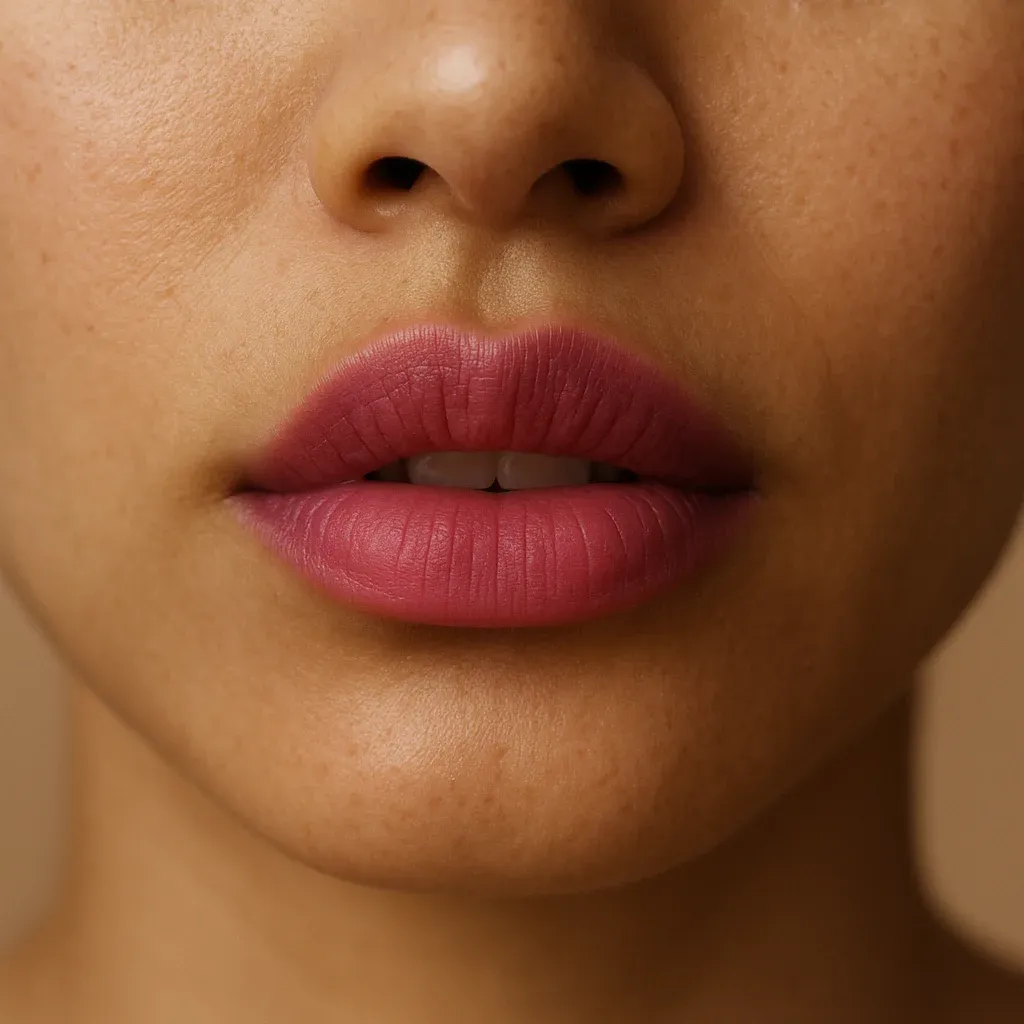
Rose or soft nude, kept light. A liner much darker than the lips reads as a 90s outline rather than a blur on lighter skin, and a warm brick can pull orange on cool lips. If your lips are naturally pale, press the colour slightly further out so the mouth does not look unfinished.
- Medium
Terracotta, rosy-brown and warm nude all blur well on medium lips. Keep the liner and the colour in the same family — a warm liner under a cool rose colour is what leaves a grey edge once the middle has faded.
- Deep
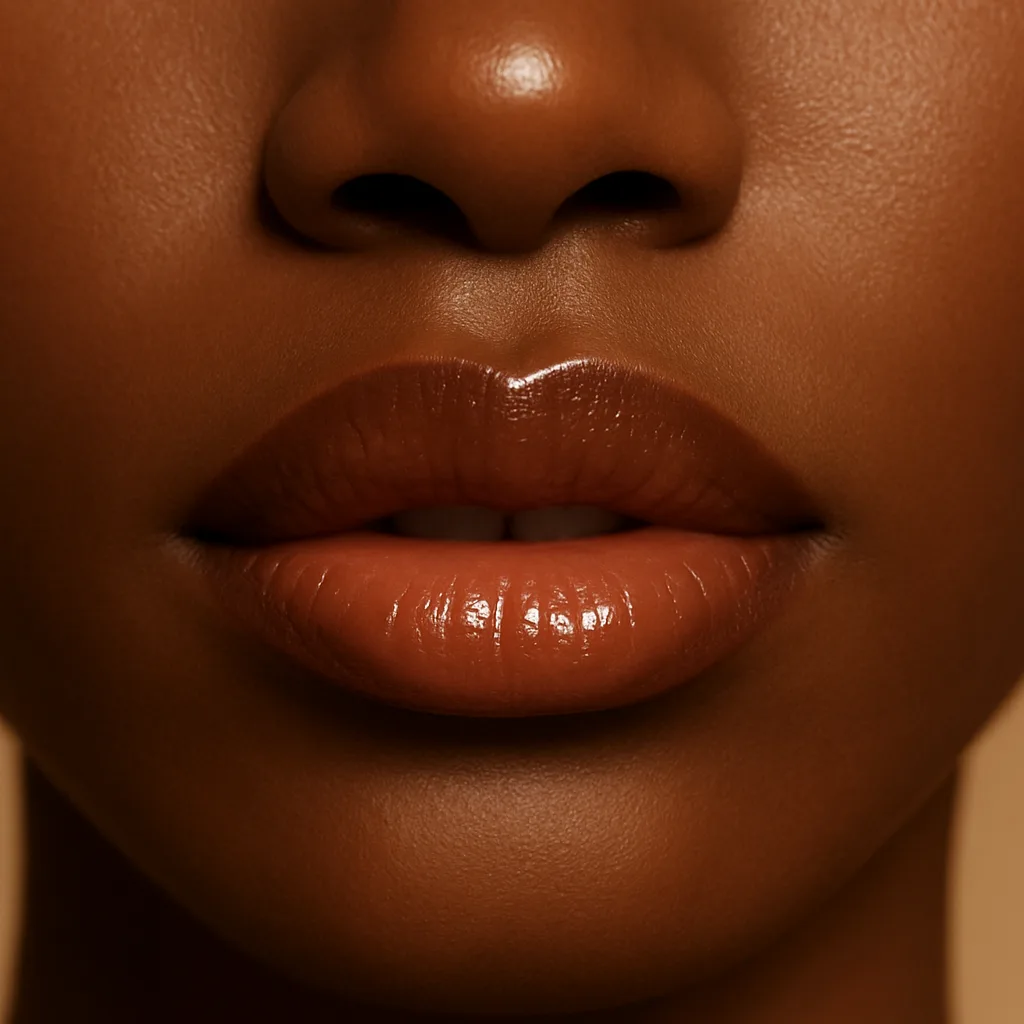
Pick a liner close to your natural lip line — deep brown, plum or burgundy — and a colour with real pigment, and work in two tones: a deeper liner at the outer edge and a slightly lighter centre is what makes the blur visible at all on deeply pigmented lips. A nude lighter than your lips is the mistake here, and it reads grey the moment it is smudged.
Why lip colour goes grey — and what to use instead
A blurred lip goes grey for one reason: something paler or darker than the lip is spread thin over it. A nude liner lighter than deeper lip pigment sits on the surface and reads as ash once it is smudged; a liner much darker than the lips thins out over the middle of the mouth and leaves a purple-grey rim where the two meet. Milky or pearled balms do the same on top. What to use instead: a liner within a step or two of your own lip colour, a matte or soft-matte colour in the same family, and a clear balm rather than a pearl one. If the blurred edge looks grey in daylight, the liner is the wrong depth — no amount of blending will warm it up.
The kit
What you need
Liner
- Nude, rose or rosy-brown lip liner one to two steps deeper than your natural lip — soft enough to smudge, not a hard wooden pencil
- A liner close to your own lip colour for the deeper-skin two-tone version
Colour
- Matte or soft-matte lipstick, or a lip tint, in the same family as the liner
- Tissues for blotting
Gloss
- Optional: a little balm or gloss, tapped on the centre only — a full gloss layer reinstates the edge you just blurred
Tools
- Clean fingertip
- Cotton buds
- A small flat brush if you want to place the colour precisely
Before you start: New to a product? Patch-test it on your inner forearm 24 hours before you wear it on your face, and check expiry dates on anything that has been open a while. Stop using anything that stings, itches or breaks you out.
Products & brands
Suggestions, not tested endorsements. These are widely available lines that suit this step; formulas and shade ranges change, so check the version you are buying. No prices and no links — brands are listed by tier so you can choose by budget.
Nude, rose or lip-matching liner
Drugstore
- e.l.f. Cream Glide Lip Liner
- Collection Plumping Lip Liner
Mid-range
- MAC Lip Pencil
- Laura Mercier Caviar Perfecting Lip Liner
Premium
- Estée Lauder Double Wear Stay in Place Lip Pencil
- Pat McGrath Legendary Longwear Lip Liner
Matte or soft-matte colour
Drugstore
- Collection Soft Matte Lipstick
Mid-range
- MAC MACximal Silky Matte Lipstick
- NARS Powermatte High Intensity Lipstick
Premium
- Estée Lauder Pure Color Matte Lipstick
No dedicated lip tint was verified — a matte or soft-matte lipstick is what these verified rows cover.
Optional balm or gloss for the centre
Drugstore
- e.l.f. Glow Reviver Lip Plumping Oil
Mid-range
- NARS Afterglow Lip Shine Gloss
No premium gloss was verified — a clear or tinted gloss from the drugstore or mid-range tier works over this pairing.
Tools — fingertip, cotton buds, tissues
No specific product named here — a damp makeup sponge, a small angled brush or a spoolie from any brand works. No brush, sponge or spoolie could be verified at drugstore or mid-range, so none is named.
No product here is paid for or linked to, and nothing on this page earns a commission. Where a slot has no verified product we say so rather than guess.
Follow along
Step by step
Use Previous and Next, or the arrow keys.
Balm, then blot dry
Apply a thin balm, leave it for a minute, then blot until the surface is soft but no longer slippery.
Why it works
A matte edge only blurs cleanly on a dry surface. Balm left on the lip makes the liner slide instead of smudge, and the edge goes patchy rather than soft.
Skin tone notes
- Light
Lighter lips flake visibly under a matte finish, so use a thin balm rather than an oil and blot hard. A rose or soft nude liner keeps the blur looking like your own mouth; a liner much darker than your lips reads as a 90s outline instead.
- Medium
Prep for texture rather than colour on medium lips: a thin balm, a firm blot, and a soft terracotta or rosy-brown liner. Leave the balm on the outer edge and the blur will slide within the hour.
- Deep
Deeper lips carry more visible lines, so keep the balm thin and blot almost all of it off. Choose a liner close to your own lip line — deep brown, plum or burgundy — and a richly pigmented colour: a nude lighter than your lips is the classic mistake here, and it goes grey as it blurs.
Next
More combos
Want the whole face rather than just the lip? Browse the nine full looks.